
⏰ Time & Light
In the Arashiyama bamboo grove, sunlight filters through ten thousand stalks, creating emerald-tinted illumination. The light shifts constantly as bamboo sways. Studies show this gentle light lowers cortisol levels. I felt it immediately - my breathing slowed, my shoulders dropped.
👂 Sensory Experience
The bamboo grove engages sound more than any other place. Stalks knock against each other producing hollow, woody percussion - a rhythmic, almost musical pattern designated as one of Japan's '100 Soundscapes.' Beneath this, bamboo leaves create a constant whispering undertone.
🏙 Space & Perspective
The bamboo grove creates total enclosure with vertical openness. Stalks rise 20 meters, their canopy forming a natural ceiling, but slender trunks allow glimpses of sky. You feel simultaneously held and free. The transition into Tenryu-ji's open gardens amplifies this contrast.
👥 People & Landscape
A monk at Ryoan-ji raked gravel in precise, meditative strokes. 'The garden is not for looking,' he told me. 'It is for seeing.' The distinction between passive observation and active perception is the essence of Kyoto's healing philosophy.
🎨 Color Aesthetics
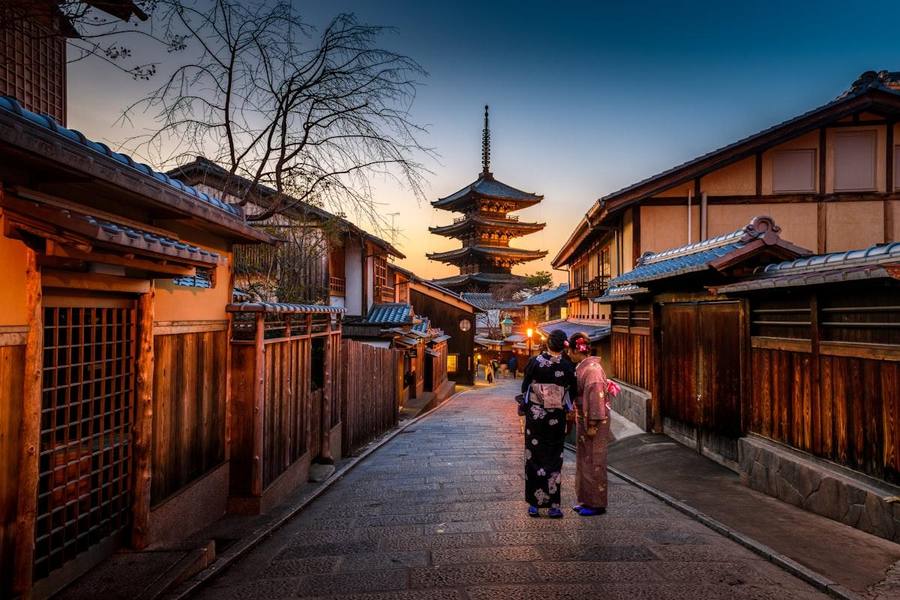
Deep green of bamboo and moss, warm brown of aged wood, cream of shoji screens, vermilion of torii gates. This restrained palette creates visual calm. The greens alone contain a universe: bright lime of new shoots, deep forest green of pine, gray-green of lichen.
Practical Guide
- Visit the bamboo grove before 8 AM for solitude.
- Book a traditional ryokan for the full experience.
- Try zazen meditation at Shunko-in temple.
- The Philosopher's Path in cherry blossom season is transcendent.