
⏰ Time & Light
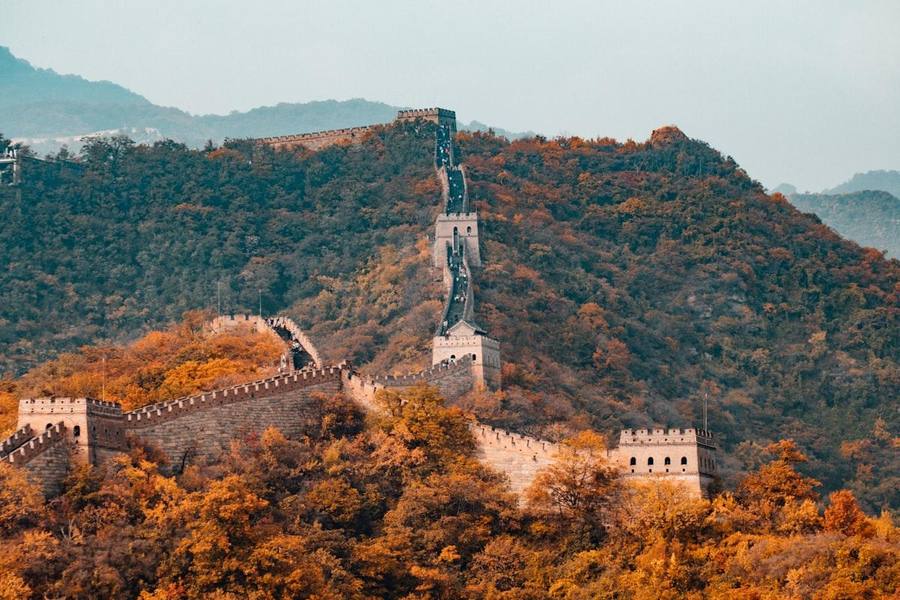
At Jinshanling at dawn, the wall follows mountain ridgelines into distance, each section becoming lighter and bluer until dissolving into mist. Morning light catches eastern face of watchtowers. As sun rises, mist burns away revealing layer after layer of mountains.
👂 Sensory Experience
Walking the Great Wall engages body. Stone steps are uneven - some knee-high, others barely ankle-level. Wind at altitude is persistent, carrying wild herb scent and distant woodsmoke. Stone under hands is warm where sun touches, cold in shadow. Silence between towers is profound.
🏙 Space & Perspective
Unlike most structures, the Wall follows mountain contours - rising over peaks, dipping into valleys. Watchtowers provide punctuation marks. From a tower, you see the wall stretching to vanishing point - a line called the only human structure visible from space.
👥 People & Landscape
Built by millions of laborers over centuries, many buried within. Farmer Liu told of 'bone walls' - sections where remains were mixed with mortar. 'The Wall is beautiful, but it was built with tears.' This dual nature gives the Wall its emotional depth.
🎨 Color Aesthetics
Warm gray weathered brick, dark green mountain vegetation, earthy brown soil, blue-gray distant peaks. In autumn, red and golden leaves frame the gray wall. Watchtowers of slightly different, warmer stone catch light differently.
Practical Guide
- Jinshanling to Simatai is best hiking section (3-4 hours).
- Avoid weekends - Badaling is overrun.
- Autumn (October) offers best color and weather.
- Hire guide for wild, unrestored sections.